Service · Catalogues
Product catalogue design
Showing well also means making things easy to find.
A catalogue has to present the product and let readers find what they need. At Mariona Agency we design sales and technical catalogues, combining art direction, information architecture and layout. We organise ranges, images and specifications to create reference and sales tools that are consistent with the brand’s identity.
A range needs a logic the reader can follow
As the number of items grows, so does the difficulty of finding your way. A company’s internal order doesn’t always match the way its customers search. We look at that relationship to define categories, indexes and paths that make the catalogue easier to consult.
We work from Barcelona with real content: products, versions, dimensions, images and validated data. The design is built on that complexity. A product page has to accommodate its variations without losing clarity, and the opening spread of each family has to give context without slowing down access to the information people need.
How we think about catalogues
A wide range can overwhelm someone who is looking for just one thing.
We group products by family and give every product page the same logic.
Anyone using the catalogue finds what they need in just a few steps.
Animation: scattered products gather into families and move onto the pages of a catalogue with its index; an orange path runs from the index tab to the product someone is looking for.
Clear Flow and Human First
A clear catalogue means fewer questions and fewer ordering errors. We design a structure that makes sense at first glance and a system of product pages that can take new products without rebuilding the whole catalogue.
Behind every look-up is someone in a hurry: a sales rep on a visit, a customer comparing options, a team putting an order together. We design the catalogue around the way they search.
What we solve
Content structure
We organise families, items and levels of information. We design the route through the catalogue around its audience: buyer, specifier, distributor or sales team.
Editorial system and product pages
We create grids and page templates that combine consistency with flexibility. The hierarchy separates name, image, features and technical details without overcrowding the layout.
Photography and explanatory visuals
We define how the product and its applications should be presented. We can bring in photography, illustration, icons and diagrams when they make a difference or a use easier to understand.
Layout and production
We lay out the pages in scope and prepare the agreed versions for print or digital use. We check content, continuity and specifications with the people responsible for the project.
Thinking ahead to the next update
A catalogue is rarely published only once. We design its rules with new items, data changes and range extensions in mind. Consistent source information helps keep that system working. Before layout begins, we agree how content will be delivered and how corrections will be approved, to reduce errors between versions.
How we develop the catalogue
Understand
We review the range, its readers, how sales will use it and the material available.
Clarify
We define how the catalogue will be consulted and which information comes first.
Design
We create the system and test it on product pages of varying complexity.
Refine
We check items, hierarchy, navigation and the consistency of the whole.
Launch
We prepare the agreed production files and versions.
Case study
Catalogues and reference guides
Roca
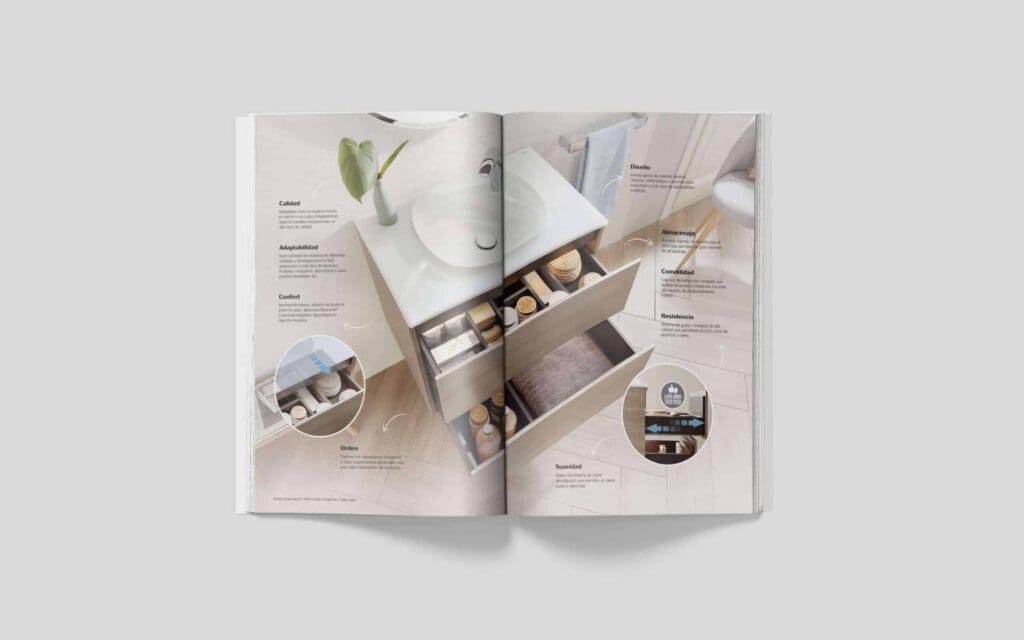
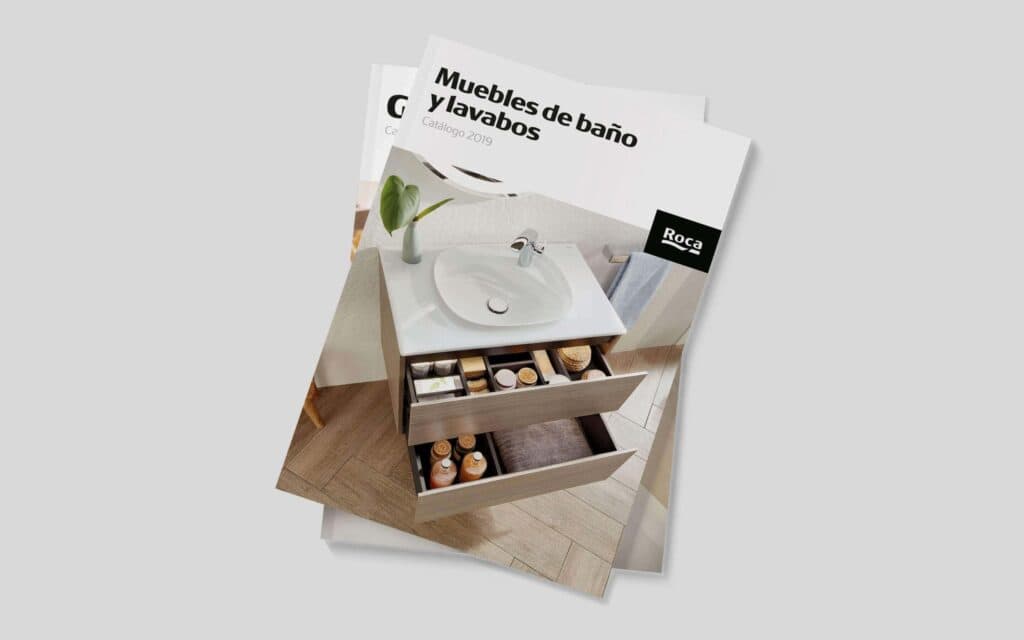
In Roca’s catalogues for Spain and Italy, we reorganised the quick guides around what the user needs: starting from the space available to find the right product line. The editorial design, icons and images support that path.
See the case study: RocaQuestions about catalogues
Can you organise the information as well as lay it out?
Yes. The project can include the structure, categories and criteria for each product page. Technical and commercial data must be approved by the client before the materials are finalised.
Can the same catalogue work in print and on screen?
It can share content and a visual system, but each use needs its own review. Format, navigation, file size and the way people read all shape the digital version.
How do you handle different versions or languages?
We define a common structure and a change-control process. The number of versions, and responsibility for translations and data, are agreed when the project is scoped.
Let’s bring order to your range and make choosing easy
Tell us who uses the catalogue and where they get stuck. We’ll design the route through it around that need.
Let’s talk about your catalogue